
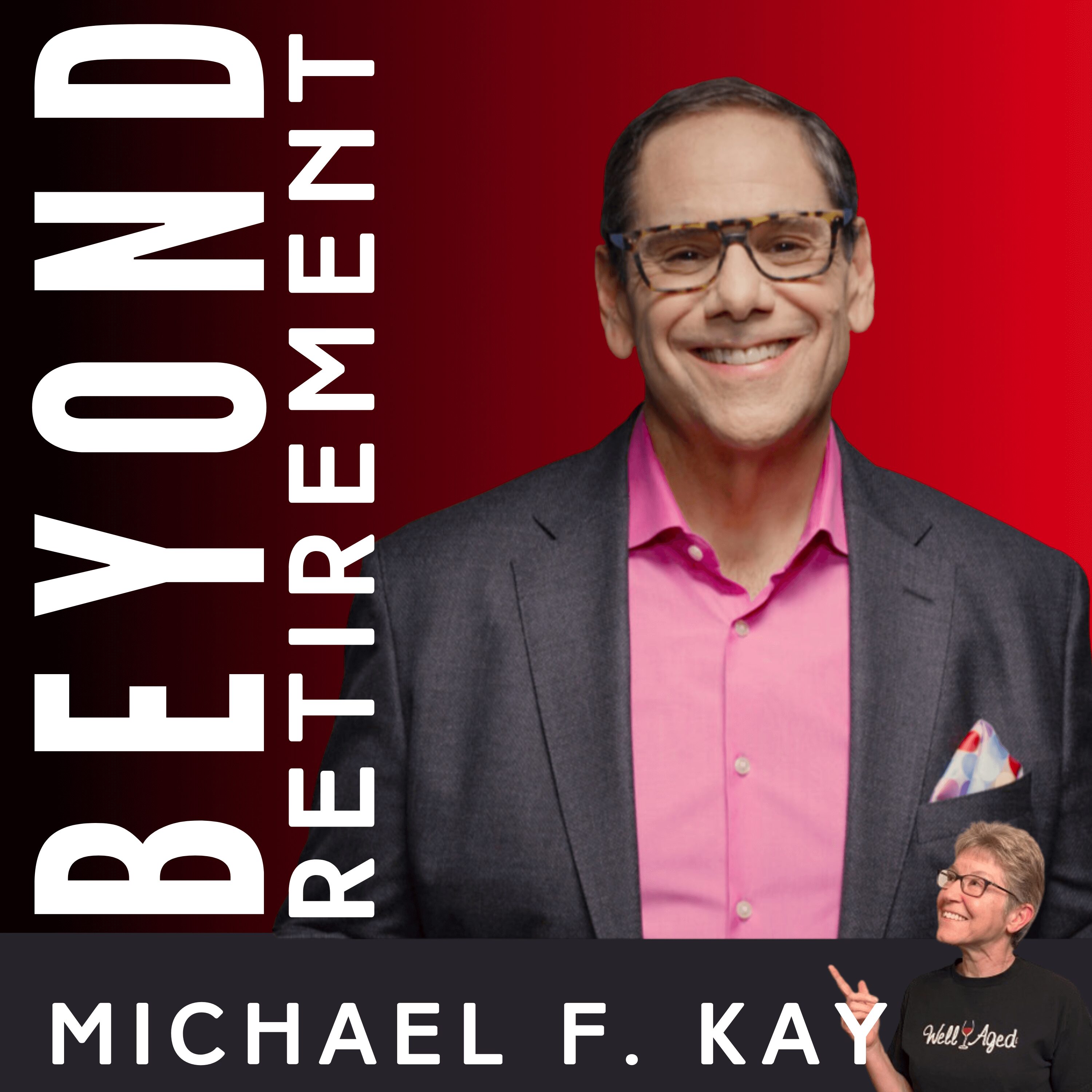
Who are you when your job is done? When your high-performance career comes to an end, what do you do?
Michael F. Kay spent decades as a CPA and financial professional before transitioning into life coaching focused on the emotional and identity side of retirement. In this conversation, he explains the origin of “Chapter X” (Remember how you always had to “solve for X” in school?) and why many high-performing men reach retirement without a clear picture of what comes next.
Together, Jacquie and Michael unpack the universal fears that show up in retirement, namely relevance, vitality, and identity, and why the solution is never one-size-fits-all. Michael shares practical ways to reclaim curiosity, experiment without pressure, and let go of ego-driven competition that no longer serves you.
They also talk about the value of remembering past transitions (your first day at work, your first promotion) as proof you already have the tools to navigate change. Michael describes exercises from his book, including writing a multi-perspective eulogy, to clarify values and live intentionally now.
The episode closes with a powerful reminder: retirement is your chance to curate your days around meaning and joy, not “shoulds,” deadlines, or status.
What We Covered:
- Michael’s path: musician → CPA → financial life planner → life coach
- Why retirement questions start with: “What does that mean to you?”
- The origin of “Chapter X” and the idea of “solve for X”
- What “X” really is: what gets you out of bed, meaning, purpose, curiosity
- Why high-performing men often struggle more with the transition
- Identity beyond the job title: “Who are you when you’re no longer your job?”
- The danger of “waiting to die” and the sadness of purposeless later years
- Depression in seniors and the pull of living in the past
- Retirement as a new transition: reclaiming a beginner’s mind
- No one dies from being uncomfortable: normalizing transition anxiety
- Unlearning: ego, competition, ladder-climbing, and “should”
- Go-go / slow-go / no-go stages and using vitality wisely
- Contribution doesn’t have to be big: small acts that lift others
- Joy as a filter: if it isn’t joyful, don’t do it
- Curating your day: energy, sleep, priorities, and flexibility
- The book’s process: progressive exercises + expert chapters (gerontology, psychology, exercise, couples)
- The eulogy exercise: clarifying values and living them now
Action steps:
- Define your X: Write down what you want to get out of bed for in this season of life.
- Try a beginner’s mind experiment: Pick one new activity and commit to 3 tries—no pressure to “be good.”
- Audit your “shoulds”: List the things you do out of obligation; cross out one this week.
- Recall a past transition: Write about your first day at your first real job—what did you learn about adapting?
- Create a 2–3 item day: Put only 2–3 priorities on your calendar, leaving space for joy.
Themes:
- Purpose & Meaning in Retirement
- Personal Growth & Lifelong Learning
- Mindset & Self-Talk
- Resilience & Emotional Strength
- Creating a Fulfilling Routine
- Courage, Confidence & Taking Action
- Life Transitions & Reinvention