
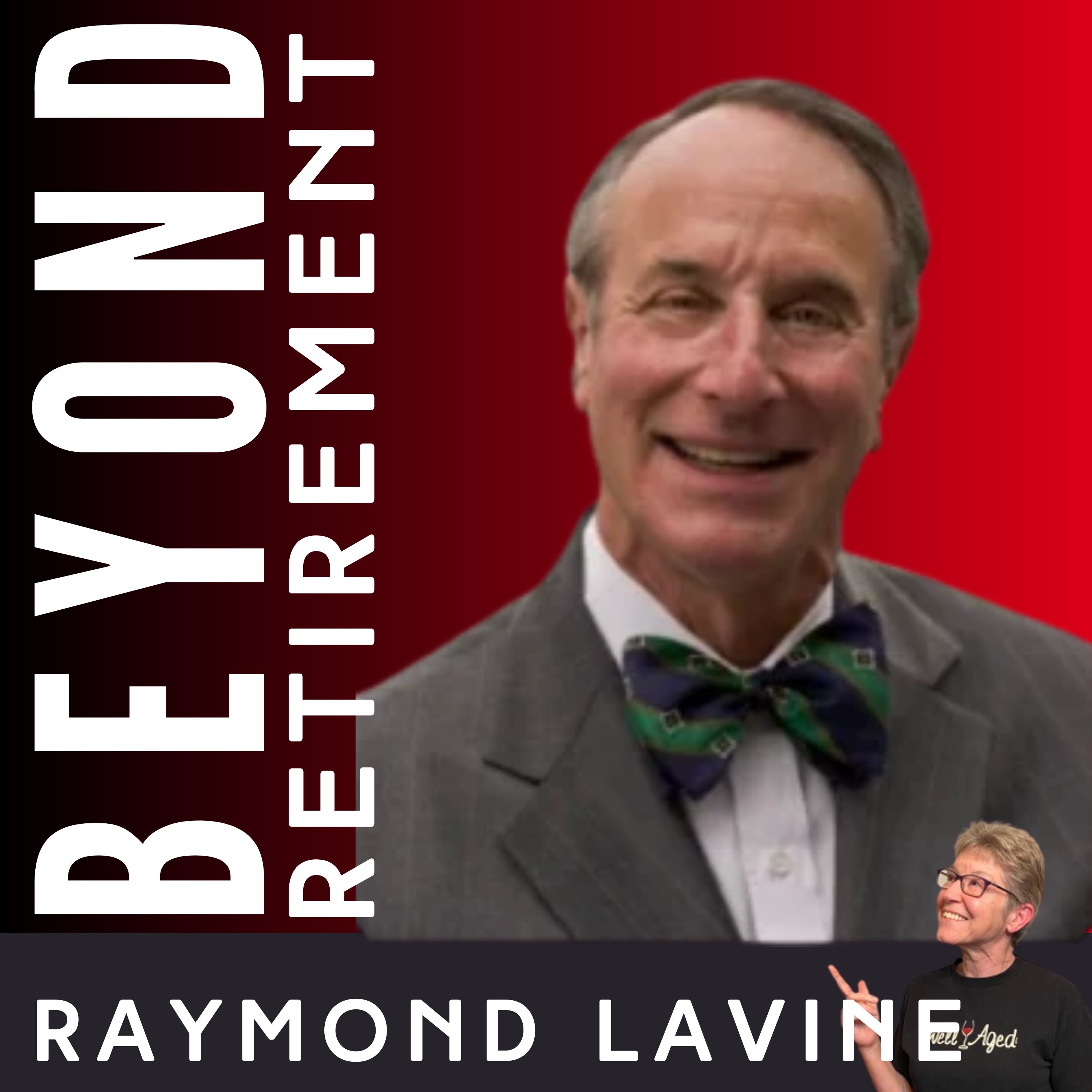
What happens to your retirement freedom when caregiving suddenly becomes part of the plan?
Retirement is often imagined as a time of freedom, but when caregiving enters the picture, everything changes. In this episode, Jacquie speaks with Raymond Lavine about how planning ahead can protect your choices, reduce family stress, and help you maintain dignity and independence as you age.
What We Cover:
- Caregiving changes everything — Retirement routines, finances, and relationships are all impacted when care is needed
- The true cost of long-term care — Why even financially stable families can struggle without a plan
- Planning before crisis hits — How early decisions preserve freedom and reduce pressure later
- The reality of family caregiving — Emotional strain, logistics, and the hidden burden on loved ones
- Staying independent with support — How the right care can actually increase mobility, travel, and social life
- Practical steps you can take now — Small, incremental actions to reduce future stress and risk
TL;DR
Caregiving is one of the most underestimated parts of retirement. Planning ahead doesn’t just reduce financial strain; it preserves your choices, protects your relationships, and allows you to maintain independence even if your health changes.
What Nobody Tells You About Caregiving in Retirement
What happens to your retirement freedom when caregiving suddenly becomes part of the plan?
Retirement is often imagined as a time of freedom—but when caregiving enters the picture, everything changes. In this episode, Jacquie speaks with Raymond Lavine about how planning ahead can protect your choices, reduce family stress, and help you maintain dignity and independence as you age.
The Retirement Reality Few People Plan For
Most retirement conversations revolve around money.
Do you have enough saved?
Will your investments last?
Can you maintain your lifestyle?
But there’s a quieter, far more disruptive reality that often gets ignored:
At some point, many people will need care.
Not briefly. Not occasionally.
But consistently—and sometimes for years.
And the problem isn’t just the need for care.
It’s that most families don’t think about it until they have no choice.
As Raymond points out, caregiving is often invisible until it isn’t. You don’t plan for it the way you plan a vacation or even retirement itself. Instead, it shows up suddenly—after a fall, a diagnosis, or a slow decline that finally reaches a tipping point.
By then, the decisions are no longer thoughtful.
They’re urgent.
When Caregiving Enters the Picture, Everything Changes
One of the clearest takeaways from this conversation is simple:
Caregiving doesn’t change one part of your life—it changes all of it.
If you’re the one needing care:
- Your independence shifts
- Your daily routines change
- Your environment may no longer work for you
If you’re the caregiver:
- Your time disappears
- Your mental energy is constantly drained
- Your life becomes structured around someone else’s needs
And often, it’s not just one person affected.
It’s:
- A spouse who now manages everything
- Adult children juggling careers and caregiving
- Friends trying to help—but unsure how
Raymond describes caregiving as relentless. It’s not a one-time task. It’s daily, ongoing, and often unpredictable.
Medication. Appointments. Mobility. Safety.
Even something as simple as getting dressed or preparing a meal can become a coordinated effort.
And underlying all of it?
Worry. Constant worry.
The Hidden Cost Isn’t Just Financial
Yes, caregiving is expensive. That part is obvious.
But what many people underestimate is how the financial impact actually works.
Even families who feel “financially secure” can struggle because:
- Care requires ongoing income, not just assets
- Costs can extend for years, not months
- Expenses stack on top of an existing lifestyle
In the transcript, Raymond shares a real example: long-term care that lasted 18 years. 
That’s not a short-term disruption.
That’s a complete financial shift.
And when care costs rise high enough, something has to give:
- Savings get depleted
- Assets get sold
- Inheritance plans disappear
But the financial cost is only part of the story.
There’s also:
- Lost income when a spouse stops working
- Emotional strain that affects decision-making
- Relationship tension within families
In many cases, the real cost is freedom.
The Illusion of Choice
One of the most important ideas in this conversation is this:
People believe they’ll have choices later, but without planning, those choices disappear.
Many assume:
- “My family will help”
- “We’ll figure it out”
- “We have enough money”
And sometimes those things are partially true.
But without a clear plan:
- Care becomes reactive instead of intentional
- Family members become overwhelmed
- Decisions are made under pressure, not clarity
Instead of choosing:
- Where you receive care
- Who provides it
- How it’s paid for
You end up accepting whatever is available.
Planning doesn’t guarantee perfection.
But it preserves options.
Caregiving Doesn’t Have to Mean Losing Your Life
One of the more surprising insights from this episode is that caregiving doesn’t automatically eliminate freedom.
In fact, with the right support, it can actually restore it.
Raymond shares examples of people who:
- Continue to travel
- Stay socially active
- Maintain routines and relationships
The difference isn’t health.
It’s support.
When care is structured and reliable:
- You’re not stuck at home
- You’re not constantly searching for help
- You’re not relying entirely on family
Instead, you can:
- Go out
- Host people
- Maintain a sense of normalcy
Without that support?
That’s when isolation, frustration, and depression tend to take over.
Why People Avoid Planning (Even When They Know Better)
This isn’t a knowledge problem.
Most people understand, at least intellectually, that aging brings change.
So why don’t they plan?
Because caregiving falls into a category that’s easy to delay:
- It’s uncomfortable
- It’s uncertain
- It doesn’t feel urgent
There’s no immediate reward.
No instant gratification.
And as Raymond puts it, this is a delayed gratification decision, which makes it easy to push aside.
Even people who have witnessed caregiving firsthand often fail to act.
They think:
- “That won’t be me”
- “I’ll deal with it later”
But later is exactly when options start to shrink.
What You Can Do Now (Without Overwhelm)
The most practical part of this conversation is this:
You don’t have to solve everything today.
You just need to start.
Here are some of the most actionable steps discussed:
1. Think About Your Preferences Early
You don’t need a full plan, but you do need clarity.
Ask yourself:
- Do I want care at home or in a facility?
- Who would I trust to help manage decisions?
- What level of independence matters most to me?
These are not easy questions, but they are powerful ones.
2. Organize Your Essentials
One of the biggest stress points in caregiving situations is missing information.
Start simple:
- Keep key documents in one place
- List important contacts
- Track medical information
This alone can remove a significant burden from your family later.
3. Look at Your Home Differently
Your home may work perfectly today—but will it work later?
Small changes make a big difference:
- Better lighting
- Safer bathrooms
- Easier-to-use fixtures
You don’t need a full renovation.
Just awareness.
4. Improve What You Can Control
Not all health outcomes are preventable, but some are influenced by daily habits.
Focus on:
- Movement
- Nutrition
- Mental engagement
Even small improvements can affect how long—and how well—you maintain independence.
5. Accept That This Is a Process
The biggest mistake people make is thinking this needs to be solved all at once.
It doesn’t.
Planning for care is like planning for retirement:
- It happens gradually
- It evolves over time
- It gets better the earlier you start
The Real Goal Isn’t Control—It’s Freedom
At the core of this conversation is a shift in perspective.
Planning for caregiving isn’t about:
- Expecting the worst
- Over-preparing
- Losing optimism
It’s about something much more practical:
Maintaining control over your life, even when circumstances change.
Because the reality is:
You may need care.
You may not.
You don’t know when.
But what you can control is this:
- Whether your family is prepared
- Whether your options remain open
- Whether your independence is supported, or restricted
And that’s the real definition of retirement freedom.
Final Thought
Most people think planning for care is about protecting their future.
But in reality, it’s also about protecting:
- Their relationships
- Their dignity
- Their ability to live life on their own terms
You don’t need to do everything today.
But doing nothing?
That’s a decision too.
About the Guest:
Raymond Lavine is a long-term care planning advocate who helps families prepare for caregiving realities before a crisis forces difficult decisions. His work is shaped by deeply personal experience—watching both of his parents navigate extended periods of care, including nearly two decades of in-home support for his mother. Through his professional practice and his podcast, Planning with Purpose: The Caregiver’s Blueprint, Raymond focuses on preserving dignity, choice, and family stability during some of life’s most vulnerable seasons.
Links & Resources:
Beyond Retirement themes discussed: Purpose & Meaning in Retirement Topics: caregiving and retirement, long-term care planning, aging with dignity, retirement lifestyle changes, caregiving costs, family caregiving stress, planning for aging, independence in retirement, aging in place, retirement health planning
|