
Your Library Is More Than Books: Social Fuel for Retirement
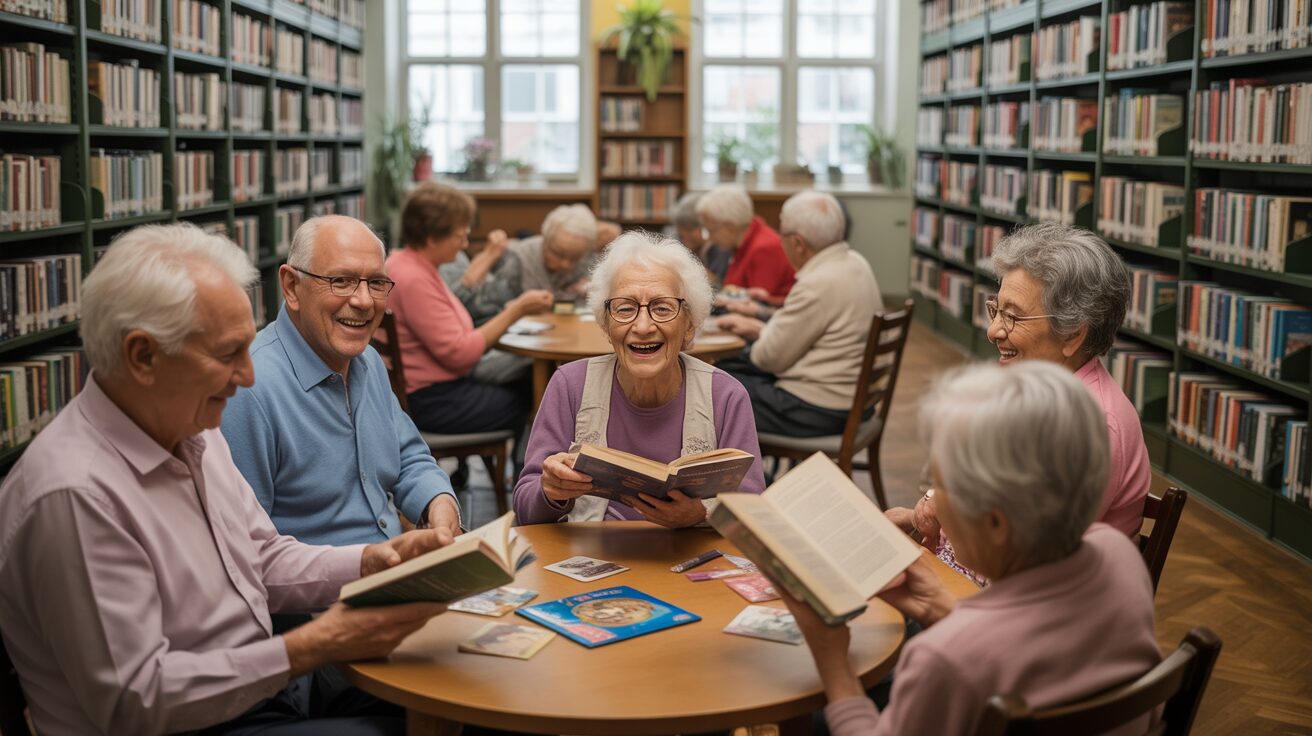
You want more connection without overhauling your life. That’s why libraries make so much sense right now: they’re warm in winter, cool in summer, free most of the time, and welcoming by design. They don’t ask you to buy a latte to sit down. They don’t judge you for arriving alone or leaving early. A library is one of the easiest places to rebuild a realistic social life after retirement—especially if your world has shrunk a little and you want to grow it again, slowly, on your terms.
In community-life terms, a library is a classic “third place”—not home and not work, but still yours. Researchers link third places to wellbeing: they add stimulation, support, and a quiet sense that you’re known. If you’ve been feeling socially rusty, a third place is the gentle re-entry ramp you need.
Why libraries, and why now
Global and national age-friendly movements are focusing communities on the basics: inclusion, participation, and cohesion across ages. That’s exactly the space libraries occupy. The World Health Organization’s age-friendly framework calls for places that support health and connection as we age (WHO). Canada’s Public Health Agency promotes Age-Friendly Communities for the same reason—helping older adults stay involved, safe, and healthy (PHAC). In the U.S., the age-friendly network just crossed 1,000 member communities (AARP), signaling a broad push toward local, practical solutions that keep people connected. Libraries are ready-made partners for this shift.
You’ll see it at ground level. Libraries host conversation circles, language tables, maker spaces, film nights, and short talks. They run device-basics sessions so you can facetime the grandkids, enlarge the text on your phone, or join a Zoom bridge club without a headache. They offer quiet seats and lively rooms. For many retirees, it’s the one place where social connection, learning, and practical help live under the same roof. The American Library Association has long emphasized services for older adults; newer initiatives are actively evaluating what works best for this age group (ALA overview; Aging Together project).

Academic work keeps underlining the link between everyday social spaces and health. Reviews argue third places may reduce disparities by providing daily contact, light structure, and chances to help others. Emerging studies even tie access to third places with social capital and leisure-time physical activity among older adults—small, steady habits that matter (Finlay 2019; Yu 2025).
What to look for this winter
- Conversation circles & language tables. Low-stakes weekly chats where faces become familiar quickly. Listen the first time, share a little more each week.
- Tech help clinics. Bring your phone or tablet and your real-life questions. Staff and trained volunteers help with photo backup, transit apps, ringtones you’ll actually hear, and safety settings.
- Maker spaces & interest clubs. Curiosity over expertise: 3D printing demos, genealogy and local history, seed libraries, simple craft hours.
- Health and movement programs. Gentle movement, fall-prevention talks, or walking clubs that start in the lobby and loop around the block—social exercise with a destination.
- Small volunteer roles. If you prefer a purpose, ask about a one-hour shift: event host, greeter, book-sale helper, or display-table set-up.
How to make a library feel like your third place
- Start tiny. Drop in for one program you can leave after 30 minutes. Notice the room, learn a couple of names, and see how it feels.
- Make it repeatable. Pick one weekly program and treat it like a standing date with yourself.
- Ask insider questions. “Which programs this month are welcoming to first-timers?” “Do you host patron-led clubs?” “When is tech help drop-in?” “Is there a volunteer coordinator?”
- Add one micro-volunteer task. Offer an hour a week with a clear job and a defined end. You’ll meet staff and regulars quickly.
- Bring a friend—or make one there. After a program, invite someone for a ten-minute coffee.
Programs that quietly rebuild confidence
- Conversation circles are a simple on-ramp to new friendships. By week two, regulars will recognize you.
- Genealogy & local history connects you through stories; it’s a great way to trade skills and discover fellow researchers.
- Tech for real life covers device basics, password managers, scam-awareness, and photo-organizing. Bring your own device—it’s expected.
- Maker labs are problem-solving spaces with friendly tools; the project gives you something to talk about besides small talk.
- Clubs you can start: a monthly “New in Town” coffee hour; a walk-to-read meetup (walk 20 minutes, then discuss a short article); a “Travel Tales” circle with one photo and a five-minute story per person.

Digital confidence without the jargon
Library digital-literacy sessions are built for today’s phones and apps. Bring your questions, your charger, and (safely stored) passwords or a password manager. Ask for help with voice-to-text, enlarging type, emergency contacts, and location sharing. If you’re supporting a spouse, parent, or neighbour, request a handout so you can practice together at home.
Intergenerational sessions—teens teaching older adults photo or messaging apps—can be surprisingly energizing. Broad evidence suggests group-based activities and digital-skills programs can produce modest but meaningful reductions in loneliness for older adults (Shekelle et al. 2024).
Winter-smart, accessible, and safe
- Transport: Ask about accessible parking, shuttles, or nearby transit. Some systems partner with local services for ride vouchers on program days.
- Timing: Daylight hours help—late morning or early afternoon is perfect.
- Mobility: Call ahead about elevators, seating with backs, and quiet rooms if you’re sound-sensitive.
- Safety kit: Keep a “go bag” by the door—library card, reading glasses, water, lip balm, sanitizer, and a notepad for names and follow-ups.
Your 30-day third-place plan
Week 1 — Scout: Visit once. Ask two questions at the desk. Write down one program that intrigues you.
Week 2 — Sample: Attend a conversation circle or tech clinic. Before you leave, put next week’s session in your calendar.
Week 3 — Settle: Return to the same program. Say hello to one person by name; ask how they discovered it.
Week 4 — Anchor: Try a one-hour micro-volunteer shift or propose a tiny club for next month. Celebrate with a short walk or coffee afterward.
When loneliness is more than a mood
If loneliness is persistent—affecting sleep, appetite, or motivation—loop in your clinician. Tell them what you’re trying at the library and ask about community programs or social-prescribing options. A large body of research ties social connection to better mental and physical health outcomes; your third place is one part of a broader care plan you deserve.
Good next clicks on Beyond Retirement
- Podcast Archive: Stories from real retirees about expectations vs. reality.
- Social & Community pillar: Friendships, volunteering, clubs, and small-circle connection.
CTA
While you’re building your third place, listen to older episodes of the Beyond Retirement podcast, check out the new season, and send guest suggestions—retirees ready to talk honestly about what they expected from retirement versus what really happened.