TL;DR: You’ll boost your chances fast by (1) watching NOAA’s Aurora Dashboard the day of, (2) getting to a dark, north-facing spot with clear skies, (3) showing up in the 2–4 hours after dark, and (4) staying warm enough to wait. Don’t obsess over Kp; use it as a rough guide, not a promise. Mind cold-weather safety, especially for older adults.
If the northern lights have been on your “someday” list, this is your window. The Sun’s activity is at (or near) its maximum in the 11-year cycle, which means more frequent and sometimes stronger auroras—even at lower latitudes than usual. The official forecast consortium led by NOAA and NASA places the Solar Cycle 25 peak around mid-2025 (± several months), so late 2025 remains prime time.
You don’t need a telescope, a wilderness trek, or a physics degree. You need a clear forecast, a dark place, warm layers, and a little patience. This guide shows you exactly how to plan a comfortable, realistic aurora night—designed with older eyes, joints, and energy levels in mind.
Solar Max in 90 seconds (what matters to you)
- The Sun’s magnetic activity rises and falls about every 11 years. Around the maximum, eruptions and high-speed solar wind are more common, powering brighter, more widespread auroras on Earth.
- Forecast centers expected Solar Cycle 25 to peak mid-2025, with a window from late-2024 through early-2026—so your odds are still better than usual right now.
Bottom line: the next several months are still unusually good for casual aurora-chasing without a big trip.
Where and when should you look?
Think north, dark, and clear.
- North-facing view: A lakefront, farm field, or high parking turnout where the northern horizon is open.
- Dark skies: Get away from big city lights if you can; even 15–30 minutes out helps.
- Timing: Aim for the first 2–4 hours after true darkness (but aurora can pop up anytime after dusk).
- Stay flexible: A thin gap in clouds can be enough. If you can’t leave home, kill porch lights and street-facing indoor lights, then scan the northern sky for pale, moving “curtains.”
The “Kp index” without the math
You’ll see “Kp” everywhere. It’s a 0–9 scale describing how disturbed Earth’s magnetic field is. Higher Kp means brighter aurora and farther-south viewing. Use it to gauge potential, not a guarantee. NOAA explains that Kp correlates with auroral location and brightness; NASA adds that Kp is a rough guide rather than a precise timing tool. Translation: if Kp looks high, go look—don’t wait for a perfect number.
Three tools that make it easy (bookmark these)
- NOAA Aurora Dashboard (U.S.) — A simple “tonight/tomorrow” map plus a short animation of the last 24 hours, with a 30–90 minute model forecast. Great for same-day go/no-go checks. NOAA Space Weather Prediction Center
- Space Weather Canada — Canada’s official portal with current geomagnetic activity and short-/long-term magnetic forecasts across the polar, auroral, and sub-auroral zones. Helpful if you’re in Canada or the northern U.S. border region. spaceweather.gc.ca
- NOAA “Tips on Viewing the Aurora” — Plain-language pointers and Kp context straight from the forecasters. NOAA Space Weather Tips on Viewing
Plan an aurora night in 10 steps
1) Pick your date with a “maybe” mindset.
Use the 7-day weather forecast to identify your clearest evening. Then, the day of, check the NOAA Aurora Dashboard for a last-minute read. If it looks promising, you go. If not, swap for your backup night.
2) Choose an easy, north-facing spot you can reach safely.
Think public park lots, lakeshore pullouts, rural overlooks, or even a dark backyard with a clear northern view. Bring a folding chair so you can wait in comfort.
3) Make it a two-hour window.
Arrive soon after darkness and give it at least 90–120 minutes. Auroras often ebb and surge; staying a bit longer catches those bursts. (NOAA’s 30-minute model helps, but it’s still weather—be patient.)
4) Layer like you’re staying still.
You’ll cool faster when sitting. Wear insulated boots, warm socks, base/mid/outer layers, gloves, hat, and a neck gaiter. Pack a thermos. Older adults face a higher risk of cold-related injuries like hypothermia and frostbite; dress and plan accordingly.
5) Bring gentle light—keep your night vision.
Use a dim red light or the lowest phone brightness to keep your eyes dark-adapted. Avoid car headlights in your viewing field if you can.
6) Add creature comforts.
A cushion for the chair, heat packs for hands/toes, and a blanket go a long way. Consider a walking pole for icy lots.
7) Phone-photo basics (no DSLR required).
• Use Night mode; set a 3–10 s exposure if your phone allows manual control.
• Prop your phone on a stable surface (railing, tripod, bean bag).
• Tap to focus on the sky, lower the ISO if your app permits to reduce noise.
• Shoot wide; you can crop later.
NASA notes that phones can capture a surprising amount with the right settings—even when your eyes see only pale gray “clouds.”
8) Safety first: driving, footing, and check-ins.
Text a friend where you’re going and when you’ll be back. Park off the roadway, watch for black ice, and use a headlamp on low when walking. If you get uncomfortably cold, go warm up before you get numb—don’t tough it out. Health Canada’s cold-exposure guidance is clear: act early.
9) If you can’t go out, “view” smarter at home.
Turn off indoor lights facing the street, open your north-facing blinds, and step outside briefly every 15–20 minutes. Use the Aurora Dashboard for time checks.
10) Have a backup plan.
Clouded out? Bookmark a reliable live cam or plan a second try on the next clear night. Solar Max gives you more opportunities in the coming weeks.
How far south can I see them?
It depends on the storm. During stronger events (higher Kp), the auroral oval expands toward lower latitudes. NOAA’s tutorial explains that Kp 7–9 can push the lights well south of their usual range, while Kp 5–6 may keep the action closer to the Canadian border and the northern tier of U.S. states. Remember: Kp is a proxy, and local clouds or city light can still spoil it—treat high Kp as your cue to get outside and check.
Fast forecast workflow (save this!)
- Morning: Glance at your local sky forecast for cloud cover; flag the clearest night this week.
- Afternoon: Peek at Space Weather Canada’s short-term magnetic review if you’re in Canada or the northern U.S.—it hints at whether the evening might be active.
Evening: Open NOAA’s Aurora Dashboard and the 30-minute forecast; if the viewline dips toward your latitude and your skies are clear, go.
Accessibility tips (because comfort = longer viewing)
- Sit down to look up. A camp chair or the car’s hatch makes scanning the sky easier on your neck/back.
- Use layers you can tweak. Overheating → sweating → chilling. Add/remove layers before you get sweaty or cold.
- Warm breaks count. Sit in the car with the heat on for 5–10 minutes; step back out when you spot brightening to the north.
- Short walks only. Choose a spot where you can park close to the view; bring a small flashlight on low to avoid trips.
- Know your limits. If you have cardiovascular or mobility issues, keep the plan conservative. Cold stress can creep up; Canada’s surveillance data underline risks for older adults in cold conditions.
What you’ll actually see (and how to tell it’s not clouds)
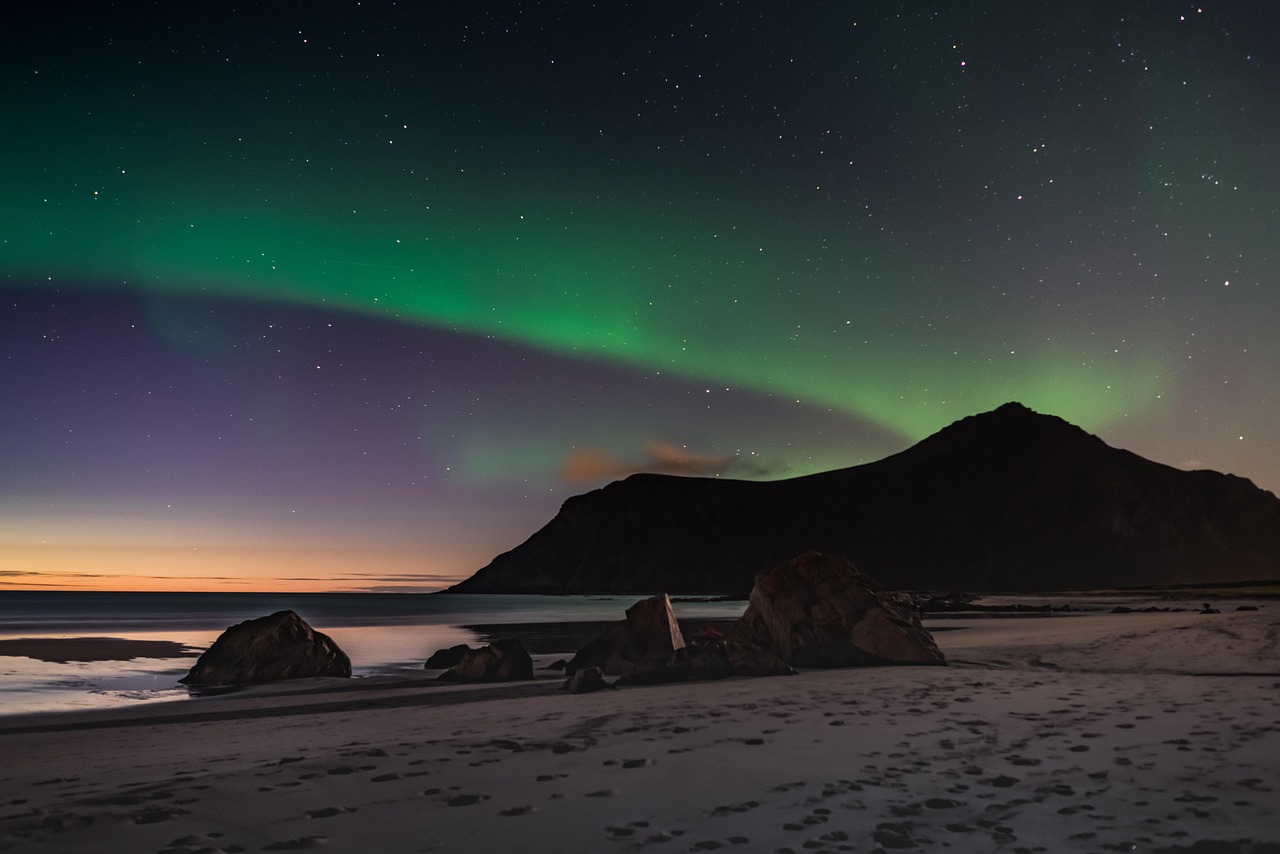
Many first-timers expect neon green. Often, your eyes see pale gray arcs or soft curtains that move—rising, rippling, or sliding sideways. That motion is the giveaway. Use your phone’s Night mode: if the image turns green/purple, you’ve found them (our cameras “see” color better at night than our eyes). NOAA’s dashboard images show this “oval” behavior; once you learn the look, you won’t confuse thin aurora with clouds again.
Quick packing list (copy/paste)
- Folding chair + cushion
- Insulated boots, wool socks, hat, gloves/liners, neck gaiter
- Base/mid/outer layers; heat packs for hands/toes
- Thermos + snacks; tissues; lip balm
- Headlamp (low/red), phone with Night mode and a small tripod/beanbag
- Car scraper,
- ice cleats if it’s slick, and a charged phone
Route plan + a simple “home safe” text to a friend
Troubleshooting
- It’s cloudy. Drive 10–20 minutes toward clearer skies if roads are safe; even a narrow clear band to the north is enough.
- The dashboard looked good, but I saw nothing. Light pollution, low clouds/fog, or haze can hide a faint display. Try a darker spot or go later when traffic (and local light) drops.
- I got cold and left, then the lights exploded. It happens. The fix is comfort: more layers, a warmer seat, a closer spot, and 15 more minutes next time.
- I’m in a big city. Seek a north-facing waterfront or park edge with fewer lights; even a modest reduction in glare helps.
Why these tips work (the science behind the shortcuts)
- Solar Max → more frequent auroras as solar eruptions and high-speed wind buffet Earth’s magnetic field. We’re in the Cycle 25 peak window now.
- Kp is helpful, not holy. It correlates with aurora brightness and latitude but isn’t accurate minute-by-minute; use it as encouragement to get eyes on the sky.
- • NOAA’s Aurora Dashboard and OVATION 30-minute model are designed for near-term decisions (should I go out tonight?).
- Canadian forecasts give regional magnetic activity context that’s particularly useful in Canada and the northern U.S.
- Cold-safety matters more with age. National surveillance shows elevated health risks from hypothermia/frostbite in cold environments for older adults—so comfort planning is part of aurora planning.
If this guide helps you catch a display, tell me what worked—your spot, your timing, your best photo hack. Then listen to the Beyond Retirement podcast: enjoy previous seaons, stay caught up on this season, and suggest guests—we’re interviewing retirees about expectations vs. reality in retirement. Your aurora story (or a friend’s) could be next.